
 By
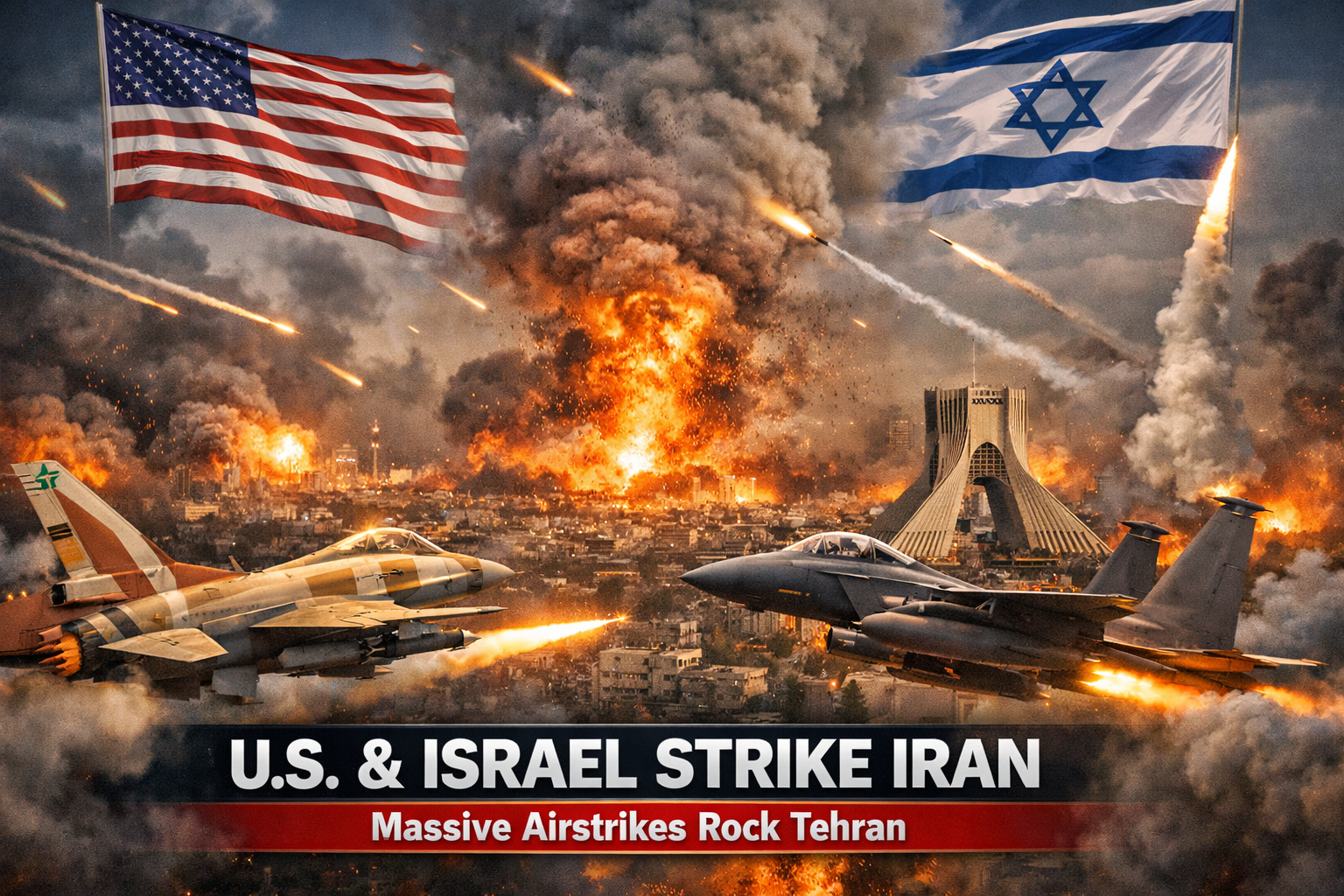
ByIn the early hours of Saturday, the United States and Israel launched a coordinated military operation targeting strategic sites across Iran, marking one of the most significant escalations in Middle East tensions in decades.
Powerful explosions were reported across Tehran and other major cities, as airstrikes and precision-guided munitions struck facilities believed to house missile systems, command centers, and military infrastructure.
U.S. defense officials described the operation as a preemptive action aimed at neutralizing imminent threats, while Israeli leadership framed the strikes as necessary to prevent future attacks and curb Iran’s regional military influence.
Operation Objectives and Military Scope
According to defense sources, the offensive targeted:
• Ballistic missile launch sites
• Air defense installations
• Command-and-control facilities
• Weapons storage and logistics hubs
Military analysts say the scale and coordination indicate months of joint planning and intelligence sharing.
The White House stated the action was intended to:
✔ Protect U.S. forces and allies
✔ Reduce Iran’s missile capabilities
✔ Deter future regional attacks
Israeli officials emphasized the strikes were directed at military infrastructure rather than civilian populations.
⸻
Iran Responds with Retaliatory Strikes
Iranian authorities condemned the attacks as violations of sovereignty and international law.
Within hours, Tehran launched retaliatory ballistic missiles and drones toward Israeli territory and U.S. military installations across the region.
Air raid sirens sounded across major Israeli cities as defense systems were activated.
Iranian leaders warned:
“All aggressor assets in the region are legitimate targets.”
⸻
Civilian Impact and Domestic Conditions
Residents inside Iran reported:
• Panic buying and long fuel lines
• Flight cancellations and airport closures
• Internet disruptions in some areas
• Schools and government offices shutting down
While official casualty figures remain unclear, humanitarian organizations are monitoring the situation closely amid concerns about civilian safety.
⸻
International Reaction: Calls for Restraint
Global response was swift and divided:
• European leaders urged immediate de-escalation and protection of civilians.
• Russia condemned the strikes and warned of severe regional consequences.
• Several Middle Eastern and Asian nations called for urgent diplomatic dialogue.
• The United Nations urged restraint and adherence to international law.
Diplomatic observers warn the confrontation could destabilize an already volatile region.
⸻
Strategic Context: Years of Rising Tension
The strikes come after years of hostility involving:
• Iran’s nuclear program and enrichment activities
• Regional proxy conflicts
• Missile development concerns
• Maritime security tensions
Israel has long considered Iran’s military expansion an existential threat, while U.S. administrations have maintained that preventing nuclear weapon capability in Iran remains a core security priority.
⸻
Expert Analysis: What Happens Next?
1. Risk of Regional Escalation
Security experts warn the conflict could widen if:
• Iranian proxy groups engage in retaliation
• U.S. bases in the region become targets
• Gulf shipping routes are threatened
2. Military Balance
Iran retains significant capabilities, including:
• Ballistics missiles and drone systems
• Regional allied militias
• Naval disruption capacity in the Persian Gulf
Israel maintains advanced missile defense and air superiority, while U.S. military presence provides strategic depth.
3. Diplomatic Pathways
Possible de-escalation routes include:
• Emergency UN mediation
• Back-channel negotiations via regional intermediaries
• Temporary ceasefire arrangements
However, analysts note domestic political pressures on all sides may complicate diplomacy.
⸻
Global Economic Impact
Energy Markets at Risk
The conflict raises fears of disruption near the Strait of Hormuz, through which roughly one-fifth of the world’s oil supply passes.
Potential consequences include:
• Rising global oil prices
• Shipping insurance spikes
• Energy supply instability
Financial Market Reaction
Investors typically respond to geopolitical risk with:
• Stock market volatility
• Movement toward safe-haven assets (gold, U.S. Treasury bonds)
• Currency fluctuations in emerging markets
Supply Chain Concerns
Escalation could affect:
• Global shipping routes
• Manufacturing supply chains
• Aviation and travel sectors
⸻
Conclusion
The joint U.S.–Israeli strikes inside Iran represent a pivotal moment in Middle East geopolitics. With Iranian retaliation underway and world powers urging restraint, the coming days will determine whether the confrontation remains contained — or expands into a broader regional conflict.
ReynardNews will continue monitoring developments.




Leave a Reply