

 By
ByWHAT Happened Today
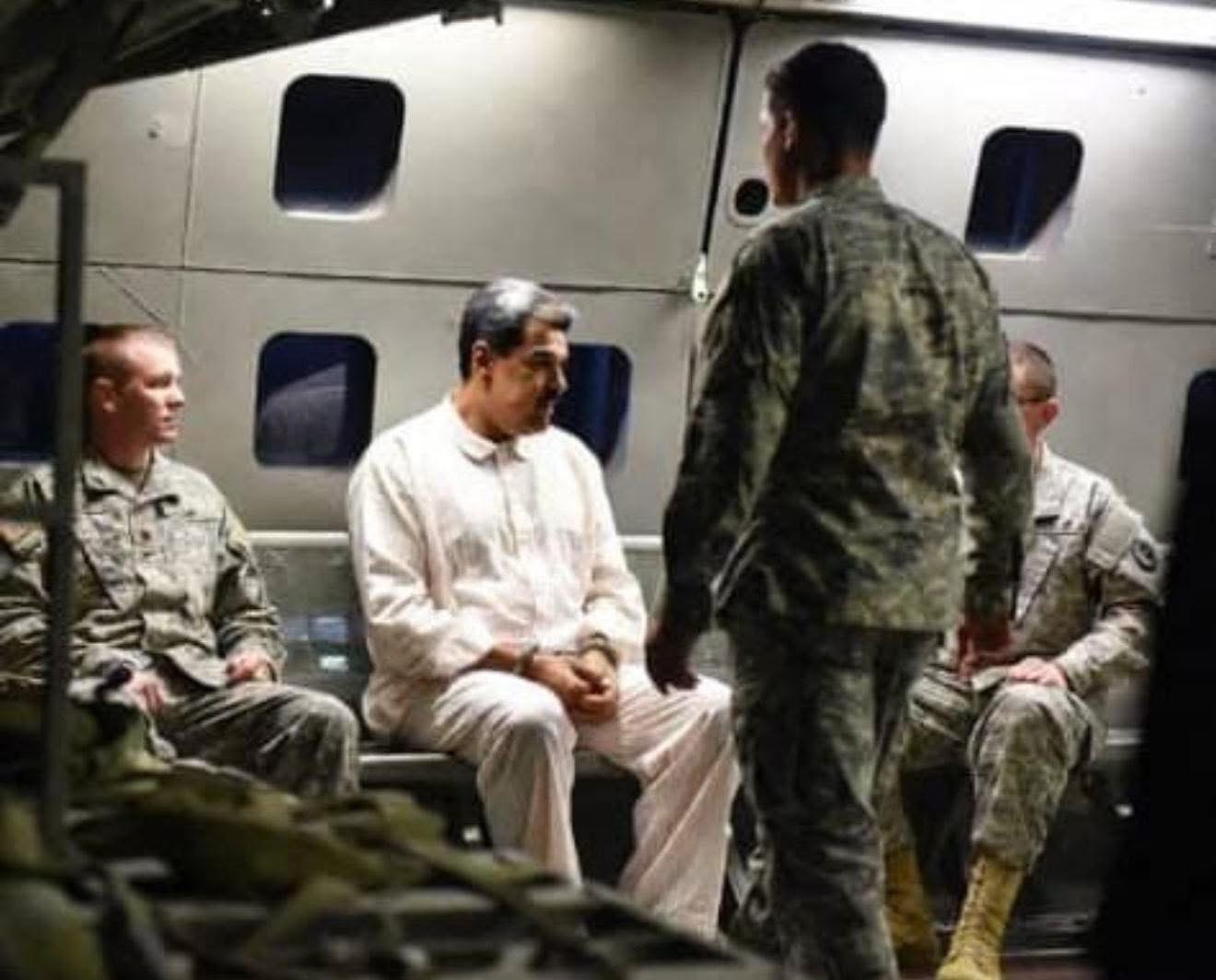
This morning, in one of the most dramatic escalations in recent hemispheric history, the United States launched coordinated air strikes across Venezuela, striking key military and government facilities. According to U.S. officials, Venezuelan President Nicolás Maduro and his spouse, First Lady Cilia Flores, were captured during a special operations mission and removed from the country.
U.S. President Donald Trump publicly stated that the operation was carried out at night and described it as a “large-scale” strike with Americans seizing Maduro and his wife, who will face charges in U.S. courts.
⸻
WHEN Did the Events Unfold?
The air strikes began in the early hours of January 3, 2026, shortly before dawn in the Venezuelan capital of Caracas. Explosions and aircraft movements were reported between approximately 2:00 a.m. and 5:00 a.m. local time. Later, by mid-morning, the U.S. president confirmed the reported capture of Maduro and announced ongoing plans for American oversight of Venezuelan affairs until a political transition is organized.
⸻
WHERE Did the Military Action Occur?
The operation was concentrated primarily in Caracas, Venezuela’s capital. Venezuelan state sources say *multiple regions — including nearby states and military bases — were hit by strikes that targeted defense installations and government centers. Caracas residents reported loud blasts, disrupted power, and low-flying aircraft over the city at dawn.
⸻
WHO Is Directly Involved
• United States Government:
President Donald Trump ordered the military operation and announced the arrest of President Maduro. U.S. defense and special operations forces are reported to have executed the capture phase of the mission.
• Venezuela’s Leadership:
Nicolás Maduro and Cilia Flores were reportedly detained by U.S. forces and flown out of Venezuelan territory as part of the mission.
• Venezuelan Government Response:
Caracas authorities denounced the strikes as “military aggression” and refused to recognize the legitimacy of the operation, calling for international support and contingency defense planning.
• Global Figures:
Regional leaders and world governments are issuing mixed statements — ranging from harsh criticism and demands for restraint to calls for peaceful resolution through multilateral institutions.
⸻
WHY the U.S. Carried Out the Strikes
The Trump administration has accused Maduro’s government of corruption, election manipulation, and involvement in international narcotics trafficking. Officials said the arrests should lead to legal accountability under U.S. law, including prosecution for alleged “narco-terrorism” and related offenses.
In Trump’s remarks, he insisted the mission aimed to open a path toward stability and lawful governance in Venezuela, but did not provide detailed public justification under international law.
⸻
HOW the Operation Was Executed
According to statements from Washington and eyewitness accounts:
• Coordinated air strikes targeted strategic facilities in and around Caracas before dawn.
• Elite U.S. special operations units reportedly captured President Maduro and his wife at a secure location.
• The detained leaders were transported out of Venezuelan airspace after the operation.
• The strike phase lasted under an hour, based on initial official descriptions, but its political reverberations continue.
President Trump also signaled that the United States could oversee governance temporarily, including economic management and security, until a new civilian government structure is established.
⸻
IMMEDIATE REACTION AND CONTEXT
Venezuelan authorities have demanded proof of life for the detained president and described the attack as an illegal act of aggression.
International responses vary widely:
• Some Latin American governments have condemned the strikes as a violation of sovereignty.
• A few leaders supportive of Caracas have urged resistance or invoked international legal norms.
• Others are calling for dialogue and pressure for peaceful resolution through the United Nations.
⸻
WHAT Happens Next
The situation remains fluid and unpredictable. Venezuelan institutions are under strain, and the political vacuum could prompt resistance movements, diplomatic interventions, or calls for regional mediation. The United States has stated that Maduro will face prosecution and that a transitional period overseen by American authorities is forthcoming — a claim that has already drawn intense debate and legal scrutiny.


Leave a Reply